Article Index
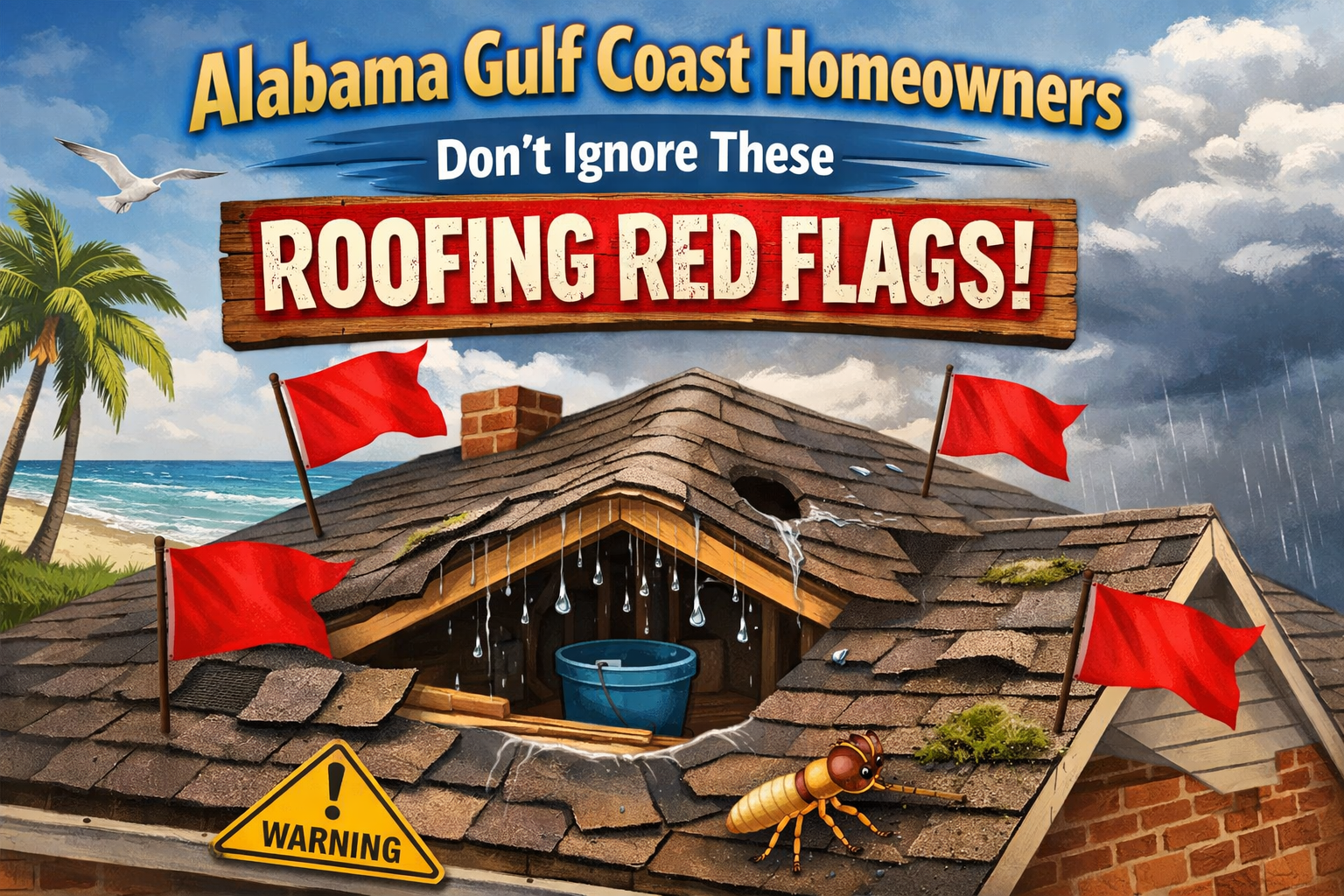
This guide walks through some of the biggest roofing red flags Gulf Coast homeowners should never brush off. From stained ceilings to sagging rooflines, these warning signs often mean your home is telling you something important.
1. It’s Leaving Stains Behind
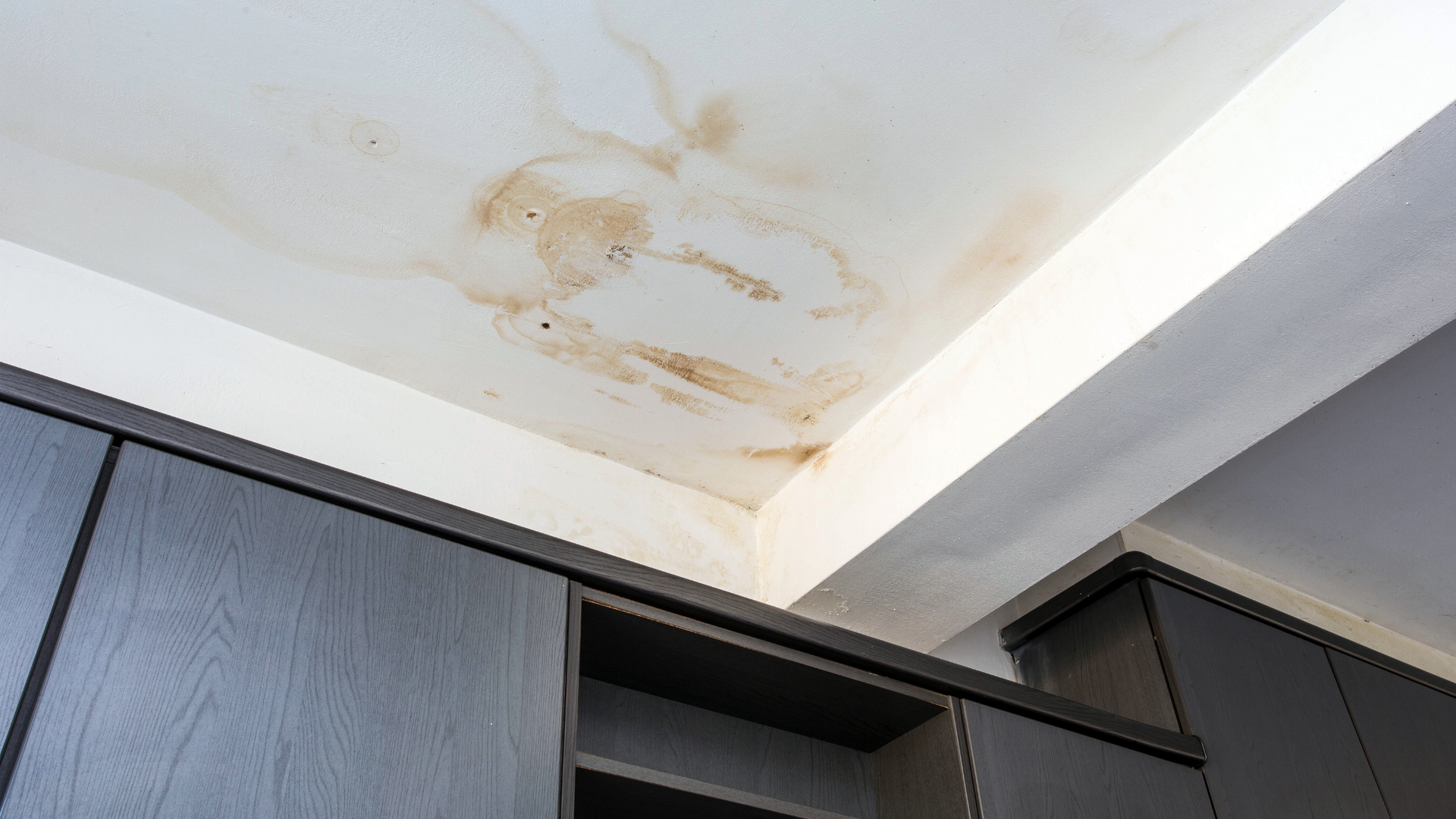
Brown spots on your ceiling or upper walls are not just an ugly surprise. They are often one of the clearest signs that water is making its way into your home. Once water gets through the roof system, it rarely stops at one small spot. It can travel along decking, framing, insulation, and drywall before it finally shows itself where you can see it.
That is part of what makes ceiling stains so tricky. The stain you see may not be directly under the original entry point. By the time the discoloration appears, moisture may have already affected more than one layer of the home. On the Alabama Gulf Coast, that is a bigger problem than many homeowners realize because heat and humidity can help trapped moisture create mold, soft wood, and interior damage faster than expected.
If the stain keeps growing, gets darker after rain, or starts bubbling the paint or drywall texture, stop treating it like a cosmetic issue. It is a roofing issue until proven otherwise.
2. It’s Falling Apart Literally
Missing shingles, curled edges, cracked tabs, or obvious wear after a storm are your roof’s way of telling you the system is no longer sealing and shedding water the way it should. If it looks rough from the ground, there is a good chance the roof surface is in worse shape up close.
Shingles do not have to fly completely off to become a problem. Curling, blistering, buckling, and general wear all point to deterioration. When the roof covering starts losing integrity, it becomes easier for wind to lift it, easier for rain to work underneath it, and easier for small problems to turn into real leaks.
Even if only a few shingles look damaged, it should not be ignored. After Gulf Coast storms, what looks minor can become a much bigger issue by the next hard rain.
- Missing shingles create openings where water and wind can start doing damage.
- Curled or lifted shingles are more vulnerable during the next storm event.
- Patchy appearance often means the roof surface is aging unevenly or nearing the end of its useful life.
3. It’s Got Rust Issues
If you have a metal roof, rusted screws or loose fasteners are not quirky roof character. They are a sign that the system may be losing the tight seal and secure attachment it depends on. Metal roofs can perform very well, but they still require maintenance, especially in a coastal environment where moisture and salt can be tough on exposed hardware and vulnerable connections.
Rust around screw heads can suggest that washers are aging, fasteners are failing, or water is finding places to linger that it should not. Loose fasteners can create entry points for water, allow movement in panels, and reduce the system’s ability to stay tight in high winds.
On the Gulf Coast, corrosion does not stay cute for long. It is better to handle hardware issues early than wait until the roof starts leaking around them.
4. It’s Leaving Clues in the Gutters
If you are seeing black, sand-like granules in your gutters, that is not random dirt. That is often your shingles shedding protective granules. When shingles start losing too much of that surface layer, they become more vulnerable to sunlight, weathering, and general breakdown.
Gutters can tell you a lot about what is happening up on the roof. In some cases, they also reveal another problem: the gutters themselves may be loose, clogged, deteriorated, or failing to move water away from the roofline correctly.
If your gutters are constantly packed with roofing granules, leaves, branches, or roof runoff that is not draining correctly, it is worth taking seriously. That buildup can hide shingle wear, contribute to water backup, and create more opportunities for moisture to affect fascia, roof edges, and surrounding materials.
- Granules in gutters may mean asphalt shingles are wearing down.
- Loose or deteriorated gutter parts can let water go where it should not.
- Debris-filled gutters can cause drainage issues at the roof edge.
5. It’s Starting to Sag
Your roofline should look straight, consistent, and solid. If it appears to dip, bow, wave, or sag, that is not something to shrug off. A sagging roofline can point to deeper issues such as long-term water damage, weakened decking, structural fatigue, or framing problems that have been developing quietly for a while.
This is one of the biggest red flags on the list because it suggests the issue is not limited to the outer roof covering. Instead, it may involve the structure supporting the roof system itself.
When a roof begins sagging, waiting is rarely the smart play. On the Gulf Coast, adding another season of rain, humidity, and storms to an already weakened structure is a gamble most homeowners do not want to take.
6. It’s Got a Bit of a Green Problem
Moss, algae, and other organic growth might give a roof that moody woodland-cottage look from a distance, but on a real Gulf Coast house, it is not doing you any favors. Growth on a roof can trap moisture, keep surfaces shaded and damp, and accelerate wear in areas that already struggle to dry out quickly.
On the Alabama Gulf Coast, where heat and humidity are regular guests, a roof that stays damp or shaded too long can age faster than homeowners expect. If you are seeing green streaks, mossy patches, or debris-heavy shaded sections, the answer is not to ignore it until it looks worse.
It is to figure out why that area is staying damp and what maintenance or repairs it needs.
↑ Back to topIt’s Not You. It’s the Roof.
We get it. You have made memories under that roof. Maybe you have patched it a few times, watched storms roll in under it, and hoped it still had a little more life left. But when a roof is showing this many red flags, denial is not a maintenance strategy.
The good news is that not every roofing red flag means you automatically need a full replacement. Sometimes the right answer is targeted repair. Sometimes it is maintenance. Sometimes it really is time to move on to a stronger, better system built for Alabama Gulf Coast weather.
If you want practical ways to help extend the life of your roof, see how to extend the life of your roof.
And if you are ready to talk with a local team, Pro Roofing Solutions helps Alabama Gulf Coast homeowners move on to something better, whether that means repairs, maintenance, or a complete roof replacement. You can reach out directly here: Contact Pro Roofing Solutions.
Frequently Asked Questions
Do ceiling stains always mean a roof leak?
Are a few missing shingles really a big deal?
What do granules in the gutters usually mean?
Should I worry about rust on a metal roof?
Who can help if I think my roof is showing red flags?
See the Red Flags Before the Storm Does
If your roof is staining ceilings, dropping granules, showing rust, sagging, or simply looking rough after Gulf Coast weather, now is the time to get it checked. Pro Roofing Solutions helps homeowners in Mobile and surrounding areas figure out whether the right next step is repair, maintenance, or replacement.