Article Index
This guide explains what flashing does, why flashing failures are such a big deal in Mobile, Alabama, how moisture from bad flashing can lead to mold, and why regular roof inspections are one of the smartest ways to prevent small flashing problems from turning into bigger home health and repair issues.
- The role of flashing in roof integrity
- Why Mobile’s humid climate makes flashing problems worse
- Signs of old or inadequate flashing
- How flashing problems lead to mold growth
- Common types of flashing materials
- Why regular roof inspections matter
- Why hire Pro Roofing Solutions for flashing inspections
- Protect your home from mold today
- Frequently asked questions
The Role of Flashing in Roof Integrity
Flashing acts as a barrier that keeps water out of the roof’s most vulnerable transition points. Anywhere the roofing surface changes direction, meets a wall, surrounds a vent pipe, wraps around a chimney, borders a skylight, or runs through a valley, flashing is there to redirect water away from the opening and keep moisture from slipping into the structure.
In other words, flashing is not a minor accessory. It is part of the roofing system’s waterproof strategy. Shingles, panels, and other visible roof coverings shed most of the water, but flashing protects the tricky areas where leaks are more likely to start. When flashing is installed correctly and remains in good shape, it quietly does its job for years. When it begins to corrode, loosen, separate, crack, or lose sealant, that protection weakens fast.
Once flashing fails, water may begin entering the attic, walls, insulation, and ceiling cavities. Sometimes that moisture shows up quickly as stains or drips. Other times it stays hidden long enough to create a much bigger problem before the homeowner realizes anything is wrong.
Why Mobile’s Humid Climate Makes Flashing Problems Worse
Mobile, Alabama is tough on roofs. High humidity, frequent rain, strong summer storms, salt-influenced coastal air, and long stretches of heat all add stress to roofing materials and roof details. When flashing begins to weaken in this environment, even a relatively small breach can become a bigger issue much faster than it might in a drier climate.
That is because warm, damp air gives mold and mildew exactly what they want. Once moisture gets into a dark, enclosed space like an attic, wall cavity, or ceiling assembly, it does not take much time for mold spores to begin spreading. In the Gulf Coast climate, trapped moisture can linger, especially if ventilation is weak or the source of the leak goes unnoticed.
This is one of the biggest reasons Mobile homeowners should take flashing seriously. What starts as a small moisture-entry point around a chimney, vent, or wall intersection can quietly become a mold problem, an air-quality problem, and a structural problem at the same time.
Signs of Old or Inadequate Flashing
Flashing problems are not always obvious from the ground, but they often leave clues. Homeowners who know what to watch for have a much better chance of catching the issue before moisture has time to cause major mold or structural damage.
Common warning signs to watch for
- Water stains on ceilings or walls that suggest moisture is getting past the roof system.
- Visible rust or corrosion on flashing especially around chimneys, vents, and roof-to-wall transitions.
- Cracked or missing caulking around flashing where older sealants have dried out and failed.
- Loose flashing or lifted edges that allow water to work underneath the protective barrier.
- Persistent musty smells in the attic or upper interior spaces.
- Peeling paint or bubbling drywall caused by hidden moisture collecting behind surfaces.
If you notice one or more of these signs, it is worth having a professional inspect the roof sooner rather than later. Flashing problems usually do not improve on their own, and the longer water is allowed to enter, the more expensive the eventual repairs can become.
↑ Back to topHow Flashing Problems Lead to Mold Growth
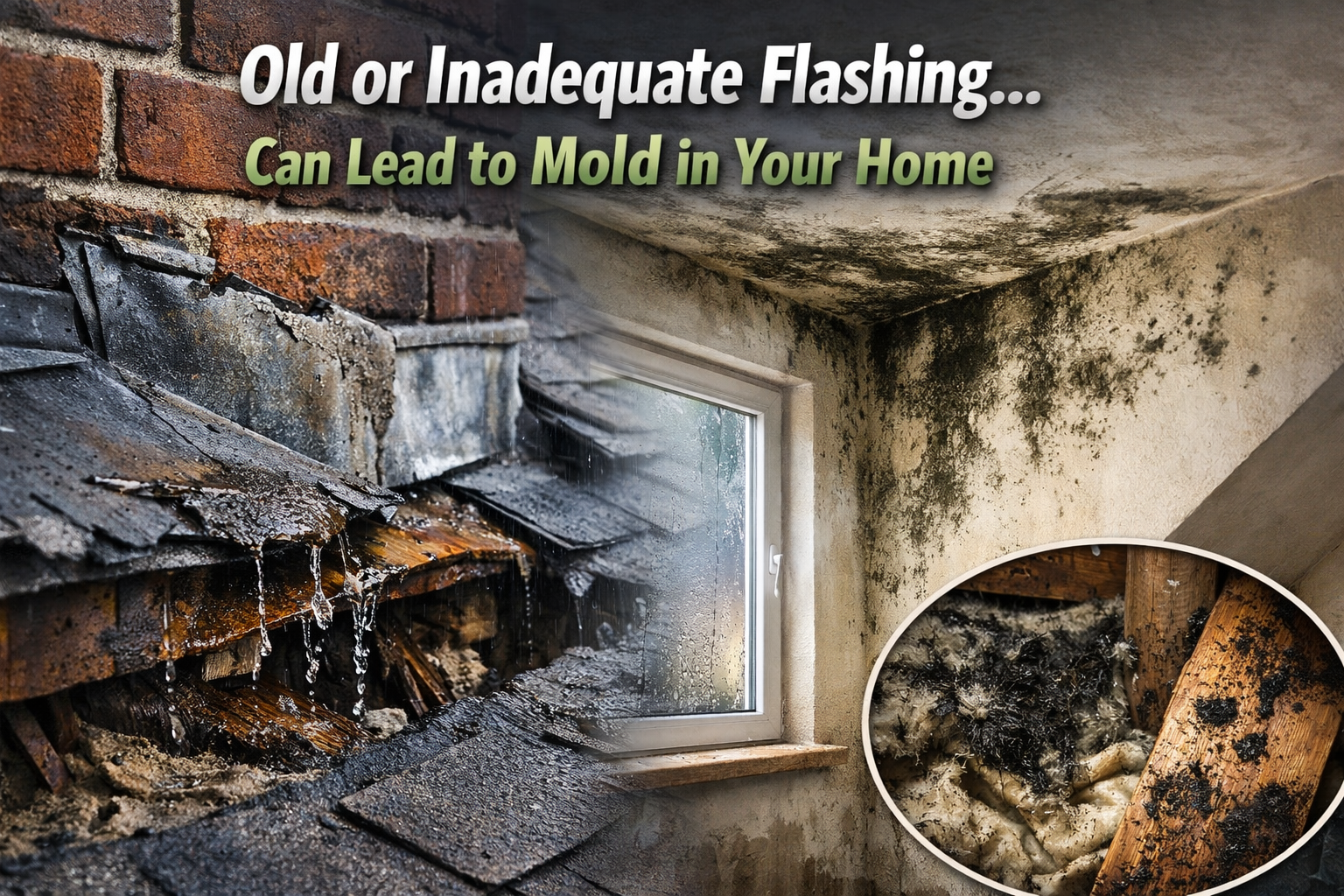
Once moisture finds its way into the house through failed flashing, mold can begin growing surprisingly fast. In the right conditions, mold can start developing within 24 to 48 hours on damp building materials. That matters because many of the materials inside your roof and wall system, including wood framing, sheathing, drywall paper, and insulation facings, can support mold growth when they stay wet long enough.
What makes flashing-related mold especially frustrating is that it often begins out of sight. The water may leak around a chimney, vent, skylight, or wall intersection and move into an attic corner or behind a finished ceiling before the homeowner sees a stain. By the time the problem becomes visible, mold may already be spreading through adjacent materials.
Mold growth can become more than a cosmetic problem. It may affect indoor air quality and can be especially troublesome for people with allergies, asthma, or respiratory sensitivity. It can also signal that the home has been dealing with moisture for longer than expected, which raises the possibility of wood rot and more serious structural repairs.
Common Types of Flashing Materials
Not all flashing is the same, and the material used can affect durability, corrosion resistance, and long-term performance. If you want a helpful overview of common flashing material types, this resource on roof flashing materials is a useful starting point.
In general, flashing materials are chosen based on the roof type, exposure conditions, and the area of the roof being protected. Some materials are valued for corrosion resistance, others for flexibility, and others for strength around high-stress joints or penetrations. In a Gulf Coast climate like Mobile’s, the quality of the flashing material matters, but so does the quality of the installation.
Even a strong flashing material can underperform if it is installed poorly, sealed incorrectly, or allowed to deteriorate without maintenance. That is why good material selection and professional installation go hand in hand.
Why Regular Roof Inspections Matter
One of the smartest ways to prevent flashing-related mold issues is by having the roof inspected regularly. Flashing problems often begin as small weaknesses: a little corrosion, a bit of separated sealant, a loose edge, or a minor gap around a penetration. Those are the kinds of things a trained roofer may catch long before they turn into interior moisture damage.
Regular inspection is especially important in Mobile, where storms, humidity, and heat constantly test roofing details. Roof flashing should be part of any serious maintenance evaluation, not an afterthought. If you want a broader overview of why roof checkups matter in this market, Pro Roofing Solutions also covers this in The Importance of Regular Roof Inspection and Maintenance in Mobile Alabama.
When flashing is checked consistently, homeowners have a better chance of making small repairs at a manageable cost rather than waiting until moisture creates mold, stains ceilings, damages insulation, or weakens structural materials.
- Regular inspections help catch small flashing failures early.
- Storm-prone Gulf Coast homes benefit from preventive roof maintenance.
- Early repairs are usually simpler and less expensive than mold remediation.
Why Hire Pro Roofing Solutions for Flashing Inspections
Having your roof inspected regularly by a qualified roofing professional is one of the best ways to prevent flashing-related issues before they get out of hand. Pro Roofing Solutions provides comprehensive roof inspections and flashing repair services in Mobile, AL, with a focus on finding early signs of moisture vulnerability before they become larger interior damage problems.
Our team understands the challenges of roofing in the Mobile climate. We know what heat, storms, humidity, and moisture can do to flashing details over time, and we know how important it is to use durable materials and careful repair techniques in this environment.
Benefits of choosing Pro Roofing Solutions
- Experienced roofing professionals who understand the demands of the Mobile, AL climate.
- High-quality materials designed to stand up to Gulf Coast moisture and storms.
- Comprehensive inspections that evaluate more than just one isolated area of the roof.
- Preventive guidance to help stop moisture intrusion before it creates mold risks inside the home.
Protect Your Home from Mold – Schedule a Flashing Inspection Today
Preventing mold growth and water damage starts with quality roof care. Flashing may not be the most visible part of the roofing system, but it protects some of the roof’s most vulnerable points. When it gets old, corroded, or poorly sealed, moisture can begin entering the home in ways that are easy to miss at first and expensive to fix later.
If you live in Mobile, Alabama, and want to protect your home from flashing-related leaks, mold, and water damage, now is the time to have the roof checked. A quick inspection today may save you significant time, stress, and money tomorrow.
Pro Roofing Solutions is ready to help homeowners across Mobile and surrounding areas with flashing inspections, repairs, and full roof evaluations designed around Gulf Coast conditions.
Frequently Asked Questions
What is roof flashing?
Can bad flashing really cause mold in a home?
What are common signs of flashing failure?
How often should flashing be checked?
Who should I call in Mobile for flashing inspection and repair?
Don’t Let Flashing Problems Turn Into Mold Problems
If your roof flashing is aging, rusting, separating, or simply has not been checked in a while, now is the time. Pro Roofing Solutions can inspect your roof, identify vulnerable flashing areas, and help protect your home from hidden moisture and mold risk.