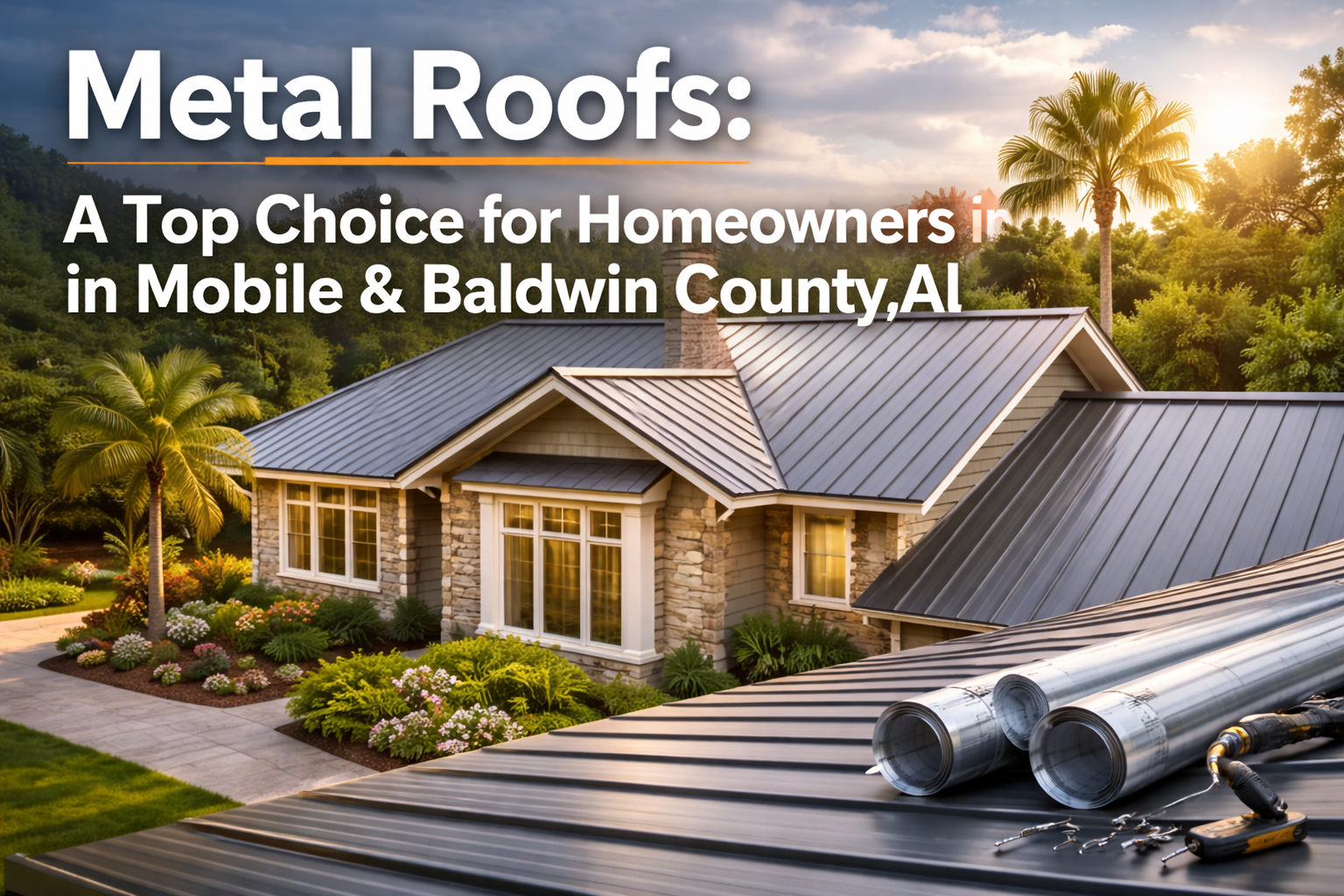
Metal Roof Maintenance: What Mobile & Baldwin County Homeowners Need to Know
Metal roofing is a popular choice across Mobile and Baldwin County for its durability, appearance, and potential energy benefits. But even a well-installed metal roof needs periodic attention. Coastal humidity, salt exposure, summer heat, and powerful storms can affect its fasteners, flashing, finish, and drainage. The key is knowing which maintenance your particular metal roofing system actually needs.
Quick Navigation
Why Metal Roofs Are Popular on the Gulf Coast Metal Roof Fastener Maintenance Sealant Maintenance and Leak Prevention Why Maintenance Matters More in Mobile What Homeowners Should Do Protecting Your Metal Roof InvestmentWhy Metal Roofs Are So Popular on the Gulf Coast
Metal roofs can offer a long service life and strong protection when the panels, attachment system, flashing, and installation are suited to the property. Their performance is not identical across products: metal type, panel profile, coating, exposure, and workmanship all matter. Some metal roof systems can last several decades, but no particular lifespan is guaranteed in coastal conditions.
There is also a meaningful difference between exposed-fastener panels and standing-seam systems with concealed clips. Understanding that distinction helps homeowners plan realistic maintenance. If you are still comparing materials, our guide to the best roofing materials for Mobile's hot and humid climate explains how metal roofing compares with other options.
Long-Term Durability
A properly specified, installed, and maintained metal roof can provide decades of protection.
Potential Energy Benefits
Reflective finishes may reduce solar heat gain; actual savings depend on the coating, insulation, ventilation, and home.
Storm Performance
Wind resistance depends on the complete tested assembly, attachment details, and installation—not metal panels alone.
Styles and Systems
Exposed-fastener and standing-seam roofs offer different appearances, fastening methods, and maintenance needs.
Metal Roof Fastener Maintenance: Why It Matters
On exposed-fastener metal roofs, screws and their sealing washers are part of the roof's weather protection. Repeated thermal movement, installation defects, corrosion, and weathering can contribute to loose or damaged fasteners and deteriorated washers. A failed seal can let water reach the substrate even when the panels look sound from the ground.
Standing-seam metal roofs are different. Many use concealed clips and fasteners beneath raised seams. Those systems still need inspection of seams, clips where accessible, flashing, penetrations, and movement details, but they do not call for routine replacement of rows of exposed panel screws that are not there.
The Metal Construction Association's fastener compatibility guidance explains why the right fastener material and attachment details are essential for a secure, weather-tight roof. In coastal environments, incompatible metals and unsuitable fasteners can also increase corrosion concerns.
There is no universal rule that every metal roof must be rescrewed every five to ten years. A roofing professional should evaluate fastener condition, washer deterioration, panel attachment, and the manufacturer's specifications before recommending tightening or replacement. Overtightening a screw can damage its washer or panel. When leaks or fastener failures appear, professional metal roof repair in Mobile, AL can help identify an appropriate repair instead of simply adding more screws.
Sealant Maintenance: Stop Leaks Before They Start
Metal roof leaks often begin at details rather than across the middle of a sound panel. Flashing around vents, chimneys, walls, skylights, and other transitions deserves close attention. Some systems also use specified sealants at laps, closures, or penetrations. UV exposure, roof movement, and age can eventually affect these materials.
Look for cracking, separation, lifting edges, staining, or recurring dampness inside the attic. A persistent leak is not necessarily solved by applying more caulk: the correct repair may involve resetting flashing, replacing a failed boot, restoring a specified seal, or correcting an improperly installed detail. Our article on how deteriorated roof flashing can lead to hidden moisture damage explains why early attention matters in humid homes.
Have penetrations, seams, flashing, and suspect seals inspected as part of regular roof maintenance and after significant storms. Repairs should use materials compatible with the specific metal roof and follow its manufacturer's requirements, rather than relying on generic sealants or temporary coatings.
Why Maintenance Matters Even More in Mobile
From Mobile and Saraland to Daphne, Fairhope, Spanish Fort, and coastal Baldwin County, metal roofs face different degrees of salt-laden air, moisture, tree debris, and storm exposure. Salt and trapped debris can accelerate deterioration at cut edges, fasteners, scratches, and locations where dissimilar metals meet. Areas closer to the water may need especially careful inspection.
Painted metal also needs the right cleaning approach. Dirt, mildew, chalking, and surface staining may affect appearance without automatically meaning the roof has failed. Sherwin-Williams Coil Coatings' cleaning and maintenance guidance discusses finish-related conditions and appropriate care. Follow the instructions for your roof's actual coating; abrasive cleaners, unapproved chemicals, and aggressive pressure washing can damage the finish or force water into vulnerable details.
Heat and humidity can also contribute to roofing problems beyond the metal itself. Read about how Alabama heat and humidity affect roofing systems and the roofing warning signs Gulf Coast homeowners should not ignore. Rust spreading from a fastener, a loose panel edge, recurring attic moisture, or a new interior stain deserves professional evaluation.
What Homeowners Should Do
The best metal roof maintenance plan is preventive and specific to the system. Arrange a qualified inspection on a schedule appropriate for your roof, its age, warranty, and exposure—often annually for a visual condition review, and after significant wind or hail events. Homeowners can monitor changes safely from the ground; roof access and repairs should be left to trained professionals.
- Identify your roof type: confirm whether it has exposed fasteners or a concealed-fastener standing-seam system.
- Inspect attachment details: have a professional check visible screws, washers, panel edges, seams, and any signs of movement or corrosion.
- Review flashing and penetrations: address deteriorating pipe boots, separated joints, and leak-prone transitions.
- Keep drainage clear: remove leaves and debris from gutters, valleys, and areas where water can collect, using safe professional methods when needed.
- Protect the coating: clean only as recommended for the specific factory finish and address scratches or exposed metal appropriately.
- Document changes: retain inspection reports, photographs, repairs, and warranty information for future maintenance decisions.
Before hurricane season, checking vulnerable details is particularly worthwhile. Our hurricane preparedness and roofing guide covers the broader steps Mobile homeowners can take before the next storm. No metal roof is automatically hurricane-proof simply because it is made of metal.
Metal Roofs Are Built to Last—If You Take Care of Them
A metal roof is a significant investment. Timely inspections and system-appropriate maintenance can help protect that investment, reduce the likelihood of preventable leaks, and reveal when repairs make more sense than replacement.
If corrosion is extensive, panels are repeatedly failing, or the roof has widespread installation problems, it may be time to discuss FORTIFIED roof replacement options in Mobile rather than continuing with temporary fixes. The best solution depends on the condition of the entire roof system, not one isolated symptom.
Pro Roofing Solutions helps homeowners throughout Mobile and Baldwin County evaluate roof condition, identify repair needs, and plan appropriate next steps. Don't wait for a ceiling stain to tell you something is wrong.
Call 251-376-5810 to Schedule an Inspection